Tours to Israel » Excursions » Tour “Jewish Jerusalem”
This excursion introduces visitors to the rich and ancient history of Jerusalem, the capital of Israel, from biblical times to the present day.
It was here that, according to tradition, Abraham was prepared to sacrifice his son Isaac; King David transformed the city into the political and spiritual capital of the Jewish people; and King Solomon built the First Temple of Jerusalem.
The history of Jerusalem is also deeply connected with many other rulers, conquerors, and civilizations that shaped the destiny of the city throughout the centuries.
Clothing should be comfortable and appropriate for the weather. Comfortable walking shoes are especially important, as many walking routes may include uneven or historic stone surfaces.
We begin our exploration in the Jewish Quarter of Jerusalem, with its many historic synagogues rich in tradition and history, including sites connected with the great Kabbalist known as the Ari.
We will visit museums of the Jewish Quarter and the legendary Zedekiah's Cave, from whose stones, according to tradition, King Solomon built the Temple in Jerusalem. Our journey begins with a visit to the traditional burial site of Rachel the Matriarch.
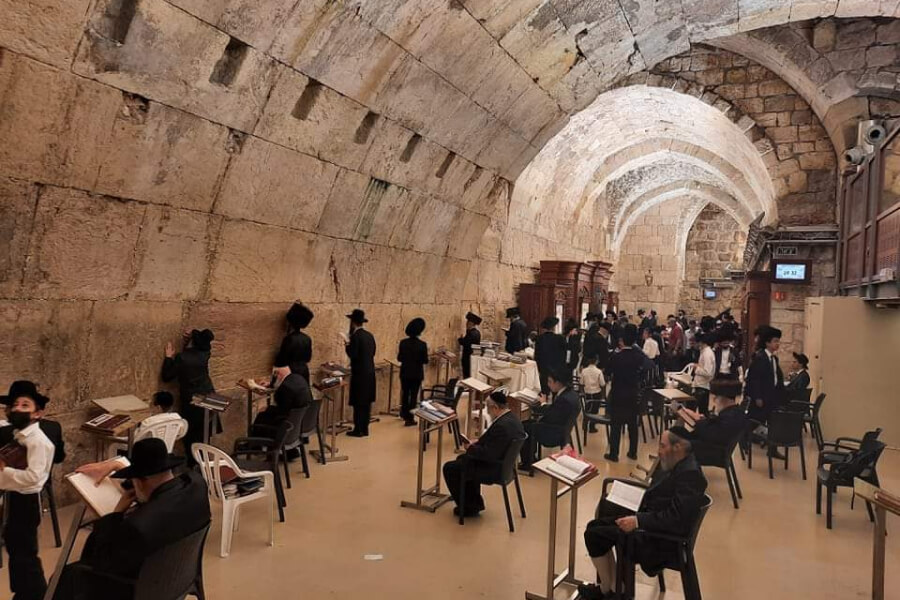
The tour may also include a visit to the Temple Mount and the tunnels beneath the Western Wall.
We then continue to the ancient City of David, where Jerusalem first developed during the reign of King David and where the ancient water tunnel system of the city was created. We will also visit the Pool of Siloam.
Several route options are available in the City of David — a “wet” route and a “dry” route. Visitors may walk through the 523-meter ancient water tunnel carved through solid rock by order of King Hezekiah, or through an even older dry tunnel constructed by the Jebusite inhabitants of Jerusalem nearly 4,000 years ago.
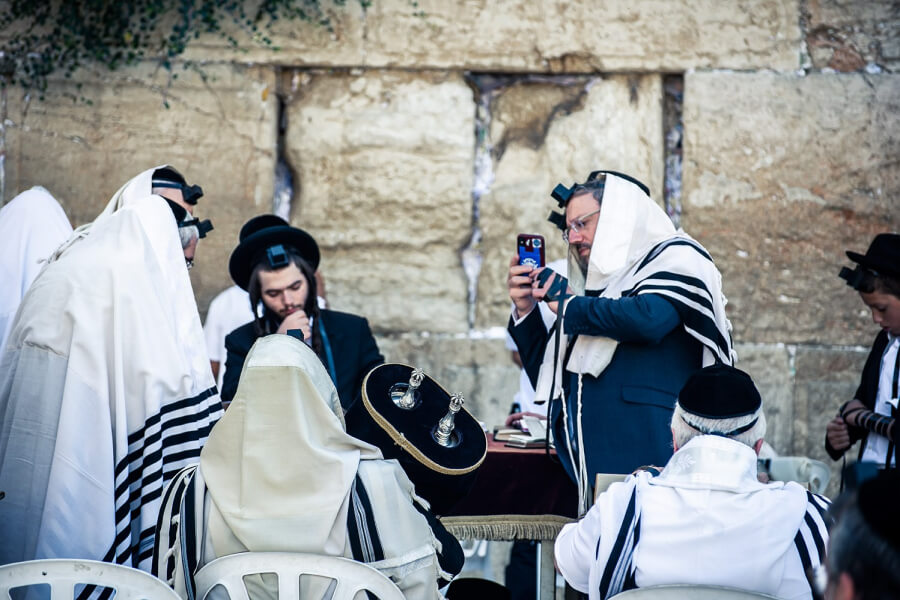
During the excursion, we will discuss one of the great mysteries of biblical history: how King David, with only a few dozen warriors, managed to conquer such a heavily fortified city. We will explore how and why it happened, what the Tanakh says about these events in different passages, and conclude the day with a visit to the sacred Western Wall.