
Tours to Israel » Travel to Israel » When is the best time to visit Israel?
When is the swimming season in Israel? When is the rainy season? When is the “velvet season”? What is the coldest month, and what is the weather like in summer? Is it worth visiting Israel during the holidays, and when do they take place? These are the first questions travelers planning a trip to the Holy Land usually ask. Here are the answers.
Israel’s climate is well suited for travel year-round, with the exception of July and August—the hottest months of the year.
The best time to visit is from March to June, when you can combine sightseeing with a beach vacation on the Mediterranean, Red, and Dead Seas. During this period, there is little to no rain, the weather is sunny, and everything is in bloom. Of course, occasional anomalies may occur—a rainy day in March or a hot desert wind—but these usually last only one or two days.
Autumn, from September to November, is also a recommended time to travel to Israel. The rainy season typically begins in late November; until then, the weather remains warm and sunny, much like in spring.
From December to February, it becomes cooler, and there may be some rainfall. However, on sunny days, temperatures can still reach up to 25°C (77°F). The coastal areas—such as Tel Aviv, Netanya, and Haifa—are noticeably warmer in winter than Jerusalem.
If you are planning a budget-friendly trip focused on excursions rather than a beach vacation, the period from December to February is also a good choice, as the weather remains relatively mild and hotel prices are generally lower.
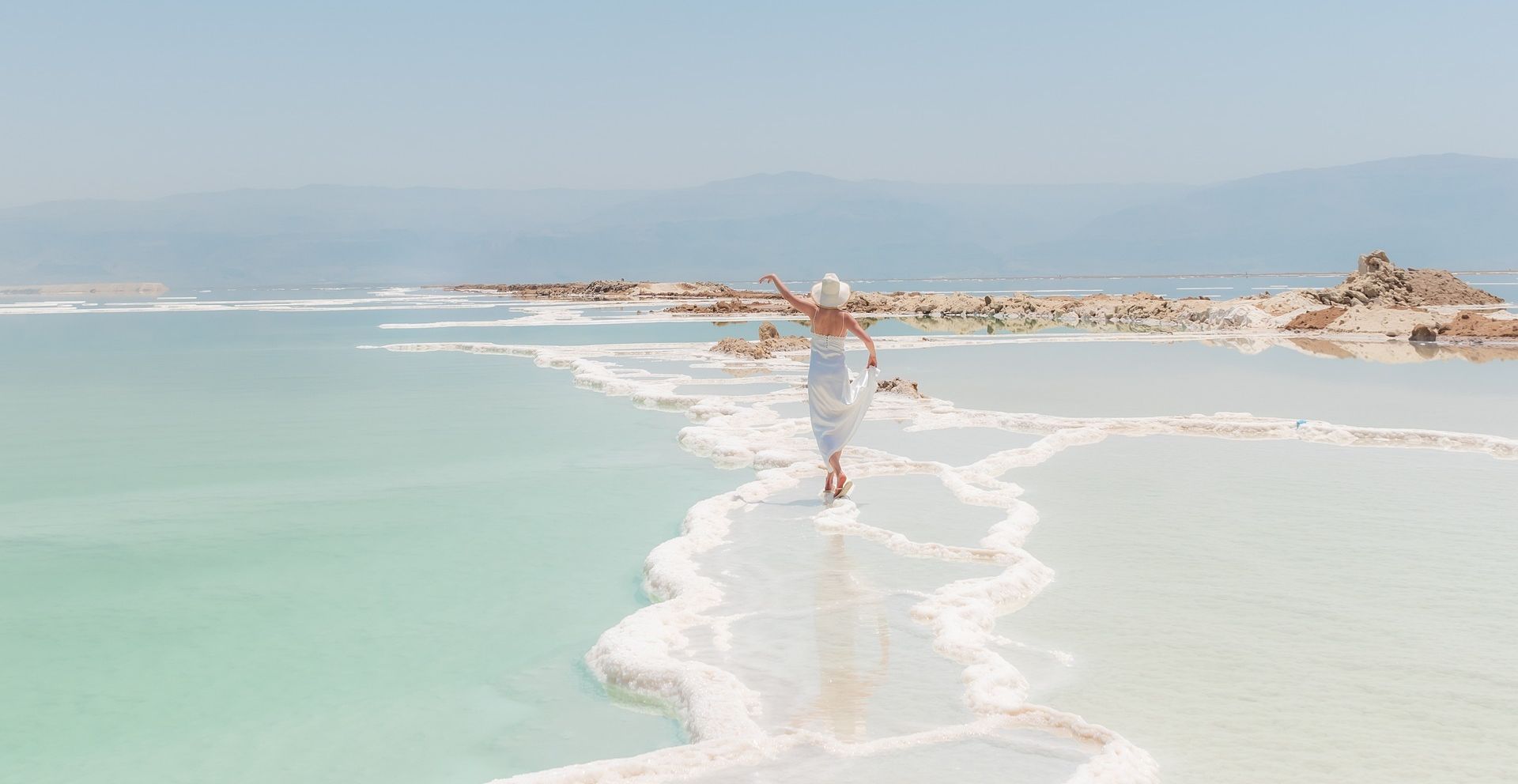
Israel is a relatively small country, but its weather varies by region. For example, at the Dead Sea, the weather is sunny almost all year round, with very little rainfall, so it remains warm even during the winter months. On the Red Sea in Eilat, the water temperature hardly changes throughout the year, staying around 22–24°C (72–75°F). In winter, air temperatures can reach up to 26°C (79°F) in the shade, so swimming and sunbathing are generally possible even during this season.
On the Mediterranean coast and in the northern regions of Israel, the seasons are more clearly defined. However, overall, traveling in Israel is comfortable throughout the year, except for the peak heat of midsummer. Below are tables showing the average air and water temperatures by region.
| Sea | Spring Mar–May | Summer Jun–Aug | Autumn Sep–Nov | Winter Dec–Feb |
|---|---|---|---|---|
| Mediterranean Sea | 19 | 27 | 26 | 18 |
| Dead Sea | 24 | 31 | 26 | 21 |
| Red Sea | 22 | 25 | 25 | 21 |
| City | January–March | April–June | July–September | October–December |
|---|---|---|---|---|
| Jerusalem | 13-16 | 21-27 | 29-28 | 24-13 |
| Tel Aviv / Haifa | 18-20 | 23-27 | 30-29 | 27-19 |
| Tiberias | 17-20 | 27-32 | 32-34 | 29-17 |
| Dead Sea | 20-25 | 25-30 | 30-35 | 30-20 |
| Eilat | 23-26 | 31-38 | 39-36 | 33-32 |
| Season | Tel Aviv | Netanya | Dead Sea | Jerusalem | Eilat | Tiberias / Haifa |
|---|---|---|---|---|---|---|
| Low Season | December
January February | November
December January February | December
January February | November
December** January February | September
December** January February | November
December* January February |
| March
April May June September* October | March
April May June September* | March
June July August September* | March
June* July August September | May
June* July August September | March
April May June* September October | |
| High Season | July*
August | July*
August | April**
May October November | April
May October** | March
April July August | July
August |
| Peak Season | July
Passover Rosh Hashanah Sukkot | July
August Passover | Passover
Sukkot | Passover
Shavuot Sukkot Christmas | Passover
Rosh Hashanah Sukkot Christmas | Passover
Shavuot Sukkot Rosh Hashanah |
When planning a trip, it is important to consider the dates of Israeli holidays, as hotel prices in certain cities may be higher than usual during these periods. For several days in March or April (depending on the year), the Jewish holiday of Passover and the Christian Easter are celebrated, and hotel prices in Jerusalem tend to rise. In September–October, Jewish holidays are observed, which also affects hotel rates throughout Israel.
Below is a table listing the main Israeli holidays and their dates for 2026–2028.
| Holiday | 2026 | 2027 | 2028 |
|---|---|---|---|
| Tu Bishvat | February 1 | January 21 | February 10 |
| Purim | March 3–4 | March 23–24 | March 12–13 |
| Passover | April 2–9 | March 22–29 | April 11–18 |
| Memorial Day | April 16 | May 5 | April 24 |
| Holocaust Remembrance Day | April 21 | May 11 | April 30 |
| Independence Day | April 22 | May 12 | May 1 |
| Shavuot | May 21–22 | June 10–11 | May 30–31 |
| Tisha B’Av | July 23 | August 14 | August 3 |
| Rosh Hashanah | September 11–13 | October 1–3 | September 20–22 |
| Yom Kippur | September 20–21 | October 10–11 | October 29–30 |
| Sukkot | September 25 – October 2 | October 15–22 | October 4–11 |
| Hanukkah | December 4–11 | December 24–31 | December 13–20 |