Tours to Israel » Туры » Tour “Myths and Realities of Israel”
People often say about Israel: “Israel is a small country, yet as vast as an entire world,” because the history of this small land is inseparably intertwined with the history of all humanity — from biblical times, through Roman rule, the Crusades, and the Ottoman era, to the creation of a modern and highly developed state.
It was here that the three major world religions were born, giving Israel the right to be called the Holy Land. It was also here that the miracle of the rebirth of the Jewish state took place, thanks to the courage and dedication of people who came to Israel from more than 100 countries around the world.
Israel is the only country in the world where, despite its small territory, one can find almost every climate zone — from the ski resort on Mount Hermon to the eternal summer of Eilat on the Red Sea.
The schedule and days of excursions depend on the arrival date.
Changes to the itinerary and excursion schedule may occur on national and religious Jewish and Christian holidays, as well as due to circumstances beyond the company’s control (such as weather conditions, etc.).
Arrival at Ben Gurion Airport.
Transfer to Jerusalem. Hotel check-in.
Overnight stay in Jerusalem.
Panorama of Jerusalem from the Mount of Olives — overlooking the holy sites of the Old City, as well as monasteries and churches on the Mount of Olives (panoramic tour): the Russian Ascension Convent, the traditional site of the Ascension of Jesus Christ, the Russian Church of Mary Magdalene, the Franciscan chapel Dominus Flevit, where Christ wept over the future of Jerusalem, and the Pater Noster Monastery, built above the cave where Christ taught the Apostles the Lord’s Prayer.
Garden of Gethsemane. The Church of All Nations, built on the site of the Agony in the Garden.
City of David — an archaeological park located on the site of the fortress conquered by King David over 3,000 years ago, where the history of Jerusalem began.
The Western Wall and the “Western Wall Tunnels” (Hasmonean Tunnel) — an underground passage running along the Western Wall of the Temple Mount.
Yemin Moshe — the first Jewish neighborhood built outside the walls of the Old City of Jerusalem. Visit to the Montefiore Windmill.
The Greek Orthodox Monastery of the Holy Cross, traditionally believed to stand on the site where the tree used for the Crucifixion of Jesus Christ once grew, and also associated with the burial place of the Georgian poet Shota Rustaveli.
Modern Jerusalem: the buildings of the Knesset and the Supreme Court, as well as the city’s contemporary neighborhoods.
Optional: “Night Mystery” — an evening light and music show in the Old City presenting the 3,000-year history of Jerusalem.
Overnight stay in Jerusalem.
In the Old City of Jerusalem, history and modern life, peoples and religions are closely interwoven.
Christian Quarter: overview of the Via Dolorosa and visit to the Church of the Holy Sepulchre.
Mount Zion: the Upper Room of the Last Supper, the Tomb of King David, and the Church of the Dormition of the Virgin Mary.
Armenian Quarter (panoramic tour): the Church of St. James and the Armenian Patriarchate.
Jewish Quarter: a walk through its streets, featuring modern residential buildings alongside remains from the periods of the First and Second Temples. The Cardo — the central street of Jerusalem during the Roman Empire. The Western Wall.
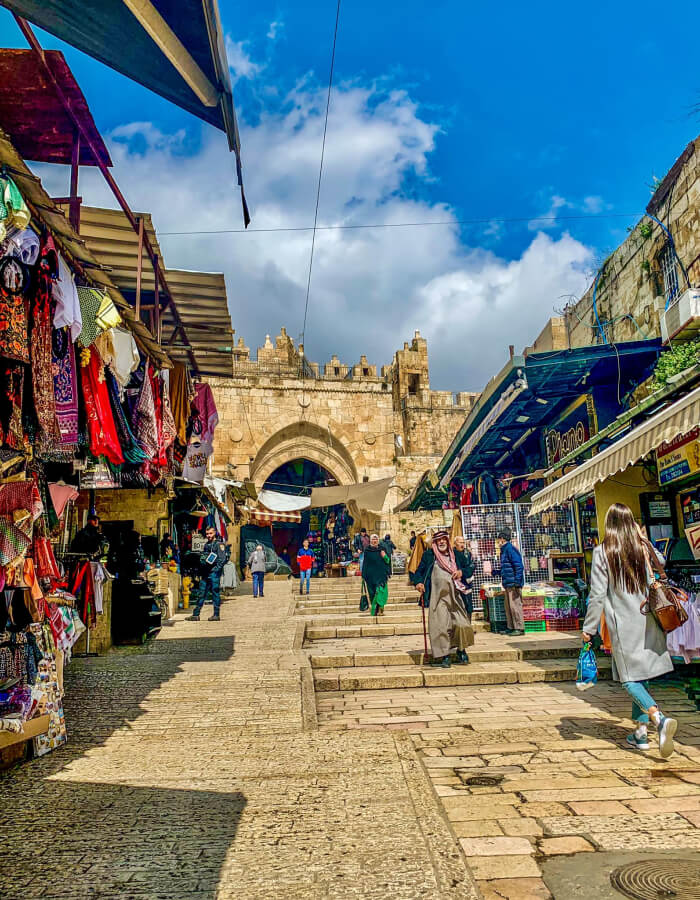
Muslim Quarter: panorama of the Dome of the Rock and the Al-Aqsa Mosque. Visit to the Arab market.
“Evening Jerusalem” tour, beginning at 20:00.
Panoramic views of the Old City illuminated at night. Walk through the narrow streets of Jerusalem’s oldest quarters and introduction to the city’s vibrant evening atmosphere.
Optional: participation in the Night Liturgy at the Church of the Holy Sepulchre from 23:30 to 02:00.
Overnight stay in Jerusalem.
Introduction to the Judean Desert — from ancient monasteries to modern cities. The Judean Desert is considered the birthplace of Christianity. The unique natural health resort of the Dead Sea lies 420 meters below sea level.
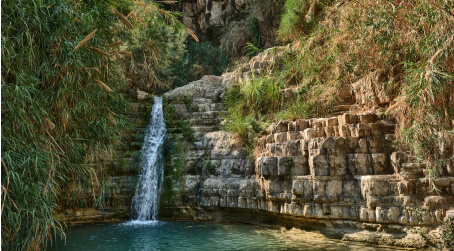
Ein Gedi — a desert oasis with waterfalls and streams, where, according to tradition, the future King David hid from the wrath of King Saul.
Masada Fortress (with cable car ascent) — a symbol of Jewish heroism during the Roman conquest of Judea. Introduction to the unique properties of Dead Sea cosmetics. Consultants will assist in selecting cosmetic products. Relaxation and swimming at a fully equipped beach on the Dead Sea.
Overnight stay in Jerusalem.
Latrun — the Monastery of Silence, famous for its vineyards and wines, olive groves, and olive oil production. Wine tasting and the opportunity to purchase various local wines.
Emmaus — according to tradition, this is the place where the resurrected Jesus broke bread with His disciples, and they recognized Him.
Old Jaffa (Joppa) — where, according to legend, Noah built his Ark and Perseus rescued Andromeda. Walk through streets that remember Alexander the Great, Richard the Lionheart, and Napoleon. This was also the starting point of the pilgrimage route to Jerusalem.
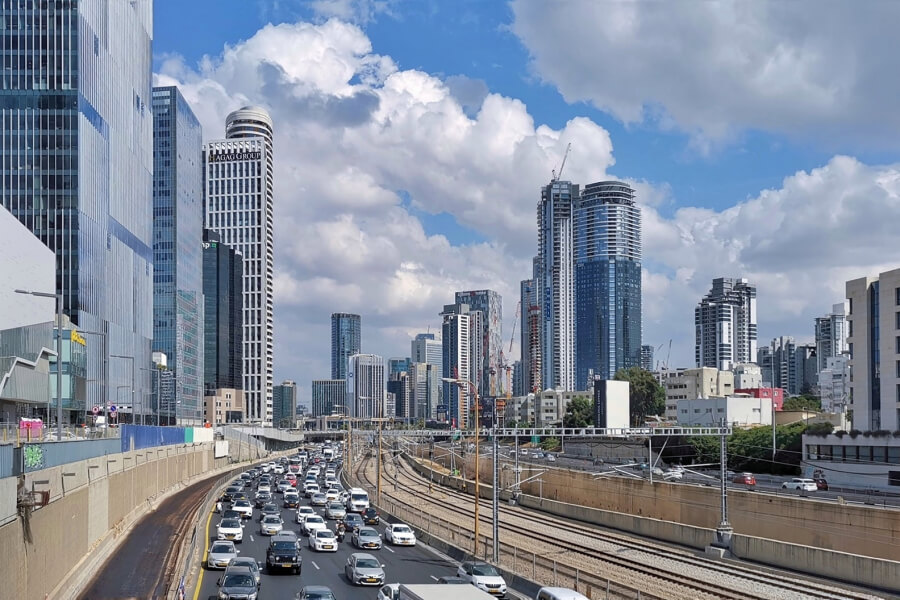
Tel Aviv — the cultural and tourist center of Israel. From the first neighborhood of Neve Tzedek to modern skyscrapers. Visit to the Diamond Exchange, one of the largest in the world. “From Diamond to Brilliant” — a private museum established in memory of Baron Oppenheimer, founder of the De Beers company. Visit to the exhibition hall, where consultants will assist guests in selecting jewelry by world-renowned Israeli designers.
Overnight stay in Tel Aviv.
Caesarea — an ancient port city and major commercial and cultural center of the Roman Empire, built by King Herod and once serving as the residence of the Roman procurators. According to legend, the Crusaders kept the Holy Grail here before taking it to Europe.
Haifa (panoramic city tour) — a city with a rich history, the world center of the Bahá’í Faith with its famous hanging gardens, and an important center of the Carmelite Order. Panorama from Mount Carmel. The story of the German Colony in Haifa.
Beit She’arim — a major religious center of the 2nd century CE, featuring a cave necropolis where many prominent Jewish religious figures were buried, including Rabbi Judah HaNasi, head of the Sanhedrin.
Megiddo — one of the oldest cities in the world, associated with King Solomon and the reign of King Ahab.
In the evening, an opportunity to enjoy the unique musical light show, the “Singing Fountain,” on the Sea of Galilee (Kinneret).
Overnight stay in Tiberias.
Safed (Tzfat) — one of the four holy cities of Judaism and the center of the mystical teachings of Kabbalah.
Sepphoris (Tzippori) — one of the most important Jewish cities in Galilee during the Roman period.
Nazareth — a city closely connected with the earthly life of Jesus Christ, revered by Christians as the city of the Annunciation. Visit to the Basilica of the Annunciation, built above the home where the Holy Family lived.
Beit Alfa — an ancient 6th-century synagogue with beautifully preserved mosaics.
Capernaum (Kfar Nahum) — the remains of the synagogue where, according to tradition, Jesus preached.
Optional: relaxation at the hot mineral springs of Hamat Gader.
The resort complex was built around the thermal mineral springs of Hamat Gader, which the Romans once selected as the ideal location for constructing bathhouses — the second largest in the entire Roman Empire.
Overnight stay in Tiberias.
Departure.
Transfer to Ben Gurion Airport.